Pages

Wednesday, August 1, 2012

Frog in the Pot, Canary in the Mine, or Rats from the Ship?


Recently I held a twitter conversation with one of my heroes, Diane Ravitch about why teachers seem to be so quiet during this reform crisis. We wondered then if teachers were like the frog who will stay in a pot of water that is slowly heated to the boiling point, eventually killing the frog. Are we staying compliant, quiet, swimming around? Do we notice it’s a little hot in here, but adjust…to the water that’s a  little hotter, and a little hotter?

Or are we the canary in the mine? Chirping frantically, choking on toxic air? Desperately trying to get the attention of someone who can do something?

Today, when I posted this blog post from Ravitch, one of my friends said a teacher she knows has characterized us as rats leaving a sinking ship. Man, this one hurts. Are we skulking out of a profession most of us committed to for life? Are some of us breathing a sigh as we wave ‘bye-bye?’

I only know my own story, and here it is.

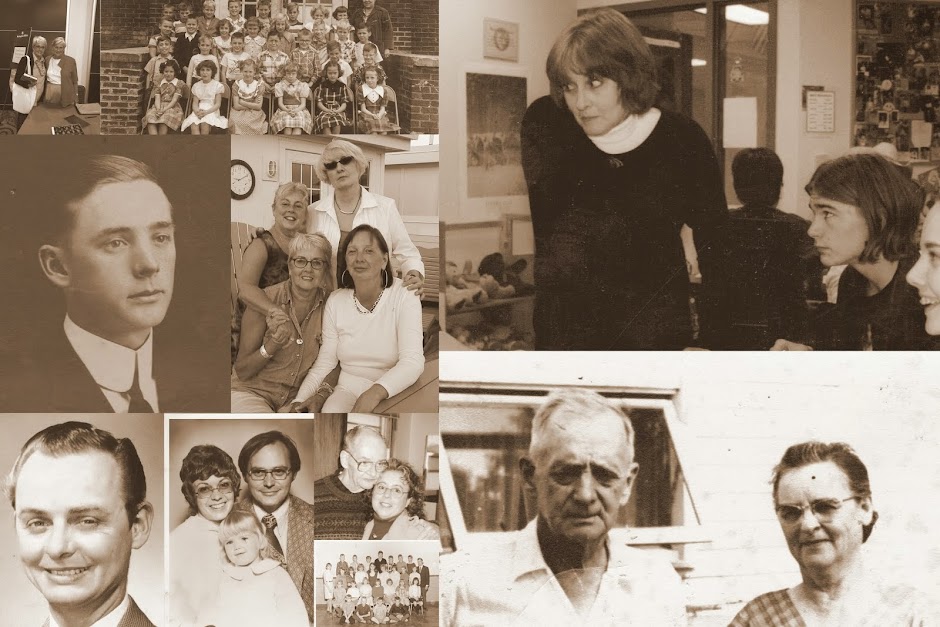
I’ve taught for 37 years. My father, grandfather, grandmother, mother-in-law, husband, sister, sister and brother-in-law, cousin, niece, son and daughter-in-law…all teachers. This is the family business. We have committed ourselves to thousands of young people. When I first became a teacher in the 60’s, I didn’t have a clue what I was really doing, but I stuck with it. I learned my craft. I got degrees, I pursued National Board Certification. I participated in National Writing Project. I sought out professional learning opportunities and I found ways to bring that learning back into my classroom.

I took everything I learned and I ‘invented’ an English elective that combines my passion for English Language Arts, reading education, library and media services: Reading for Pleasure. I am fierce in my pursuit of excellence in and out of the classroom.

I raised a family and volunteered in my community. I worked hard to balance my life and had little time to become an active, vocal teacher.

But am I a frog or a canary or a rat?

For years I smiled and complied with mandates and directives. I trusted policymakers to have the welfare of my students in mind. I taught.  I stayed in my classroom and worked with my students. I stayed out of the teachers’ lounge, ate in my room, and graded papers at night. I attended workshops and participated in my profession. I raised my children, worked in my community.

One of the first times I felt policymakers truly showed me how little they invested in public education was during the OBE debacle. Outcomes-based Education was going to save us…we all geared up to adjust our learning and our teaching. Then, oops! OBE is evil! Forget it!! They imposed and removed their mandates impulsively with no regard for kids or classrooms. They were just responding to the political climate.
We saw more testing, and with NCLB, now testing was going to become high stakes…every child in America would become an on-level reader, just because we said so. But I went along. Things were a little hotter, but I loved my kids, I loved my job, and things weren’t that bad. I could adjust.

These changes began my shift from frog to canary…I had heated conversations with my colleagues about the idiocy of demanding perfection from elementary students. Oklahoma began instituting more testing…not high stakes yet, but give us time! More requirements. More laws. More mandates. Less support.
I wasn’t especially vocal, because I didn’t think I had a voice, but I saw what was happening. I started attending more workshops and conferences, looking for ways to stay true to my students and still deliver results demanded of the non-educator meddlers.  I continued to learn.

Standardized testing became more and more high-stakes. I had learned how irrelevant standardized tests were to students’ learning, and I despaired for children who would be forced to take these tests and perform at arbitrary levels, or risk not being promoted, or not graduating.

The last year was a watershed..It seemed as if the stars aligned in a way to show me I had to do more than just chirp…I had to squawk as loudly as I could. Now teachers would be evaluated by test scores, schools would be graded by them, 3rd graders would be flunked because of them, and high school seniors have been denied diplomas. Everything I knew about testing and the data they provide tells me this is harmful, and just plain wrong. That’s when I started speaking up. The more I squawked, the more I learned. Now the focus of my learning was not to take back to my classroom, but to save my classroom.

Forces have aligned, with different ultimate motives, that are putting unsustainable force onto our public education system. TFA, Broad Academies, Gates Foundation, ALEC…precious few career educators in the lot, but a ton of ideas, unproven, to ‘fix’ a problem that does not exist. Some are here to raid the public money that sustains education, some are here with motives that may be more pure. But none of these ‘reformers’ are willing to listen to the three groups who are most knowledgeable about public education: the students, the parents and the teachers. One of my former superintendents often said everyone has an opinion about public schools because we’d all attended them, so even without training, everyone is an expert.

In Oklahoma, a group of teachers formed a facebook group to stay in touch with issues that affect us statewide and nationwide. That group, EFFORT-SOS, ‘Educators For Fairness, Openness, Responsibility and Truth; Save Our Schools,’ currently has nearly 1500 members. We ARE talking to each other. Members post, discuss, agree and disagree. We are starting to have these conversations. But is it too late?
Whereas my father was held in great esteem, and my grandfather was warmly remembered by former students 60 years after he taught them, now my family business is seen as an inconvenient problem, an expensive impediment to making more money with testing, with Common Core, with expensive technology and textbooks. Here at the end of my long career, my profession is held in low esteem by ‘reformers’ who were educated by teachers just like me, teachers they are betraying.

This will be my last year to teach…so am I the rat leaving the ship? I hope not.  But I know I’m tired of being ignored by policymakers, of being held up as the problem in public education, being belittled and marginalized by people who couldn’t last a week in my classroom. 

I’m tired, but I think I have a few more squawks in me.

Monday, July 23, 2012

Nonpartisan politics died today in Norman.

As a teacher, I thrive on collaboration and cooperation. I feel uncomfortable with confrontation...always have. So, I appreciated the nonpartisan stance of local politics in Norman. City offices, School Board, City Council, and Judicial races are to be nonpartisan. In fact, on the papers to file as a candidate, the line where other candidates declare their party is deliberately left blank.


In the last City Council election, after a primary, things got ugly. Robocalls by a local Republican state Representative, and a last-minute flyer paid for by the Cleveland County GOP Political Action Committee declared one of the candidates as the 'only conservative' Republican candidate. Other nasty things were said,  and I'm not even aware of how vile allegations got...


A friend, Cindy Cason, filed a formal complaint, and I went to the Election Commission meeting today to hear the discussion. The complaint was investigated, the City Attorney attended and gave the Commission its opinion. 


Nonpartisan politics in Norman died today. My notes follow: 


Election Commission 7/23/12

In the opinion of the City Attorney, Jeff Bryant,  the flyer in support of Williams, sent by the Cleveland County GOP PAC is not a violation of the City Charter…since the CC GOP PAC paid for the flyer ($1000), Williams did not violate the nonpartisan spirit of the Charter. His payment for the robo-call from Scott Martin was, likewise, seen as no violation, since Mr. Williams says Martin never identified himself as a politician and Republican.

The nonpartisan requirements in Council elections only apply to the candidates and their actions within the process. In their filing papers, the line for party affiliation is deliberately left blank. They are to conduct a nonpartisan campaign, but nothing stops others, working to elect the candidates to identify with partisan politics. So, the candidates are to be nonpartisan, but nothing stops other citizens bringing partisan politics into the race.

Questions about this issue have come up several times before Cindy Cason’s formal complaint, but it seems as if it’s here to stay.

City Council, School Board and Judicial races are SUPPOSED to be nonpartisan.

Ty Hardiman, the Commission Chair spoke eloquently – I’m paraphrasing…
He fears the polarized, deadlocked precedent of national partisan politics and is disappointed that it has seeped into city politics. He believes identifying candidates for local positions as Democrat or Republican is not helpful for voters. He acknowledges that people are fighting to end the nonpartisan elections in Norman. He doesn’t want to see a national agenda in place for local elections, and doesn’t believe anything good will come of this.

All points in Cindy’s complaint were dismissed, including the conflict of interest.

The robo-call by Scott Martin was discussed, and Mr. Williams said his campaign would pay that cost -- $75. He asserted that Rep. Martin did not identify himself as a Republican elected politician, and was calling ‘for a friend.’ As such, it passes the nonpartisan test for the campaign.

While there are limits on contributions to candidates, the CC GOP PAC work was NOT a contribution to Williams’ campaign, but an expenditure…the flyer cost the PAC $1000.

The Commission also discussed the timing of the CC GOP expenditure report. Supposedly, these are to be filed before the election, and as such, would have shown the $1000 investment in a nonpartisan race. But the report was late. The GOP was fined as per the charter. Someone wondered what the GOP “got away with.”  Mr. Spaulding was in attendance and said it was an honest mistake and he had faced embarrassment.
Mr. Hardiman acknowledged that at least the CC GOP PAC was identified as the originator of the flyer…he spoke of other ‘mystery mailers’ from past campaigns.

My questions:
  1. 1.       What does the CC GOP hope to gain from its $1000 investment in Mr. Williams’ campaign? Will his vote be theirs?
  2. 2.       Was the late filing a way to postpone the public’s discovery of the PAC’s investment?
  3. 3.       What would the voters have done if they realized the GOP was interfering in a nonpartisan election?
  4. 4.       How does this change the landscape of Norman’s City Council?
  5. 5.       Is this the first time a political PAC has invested in a particular City Council election?
  6. 6.       What, if anything, should the public make of the fact that the head of the CC GOP PAC is a personal friend of the new City Council Member?

Thursday, June 7, 2012

Legal or not, it's bullying by adults


In Oklahoma, high school students must pass four of seven End of Instruction (EOIs) exams in order to graduate, according to the legislation, Achieving Classroom Excellence, A.C.E. Last week, the Oklahoma School Board heard appeals from several high school seniors who were denied their diplomas because of their test scores. This is not the time to discuss high-stakes testing and the philosophy of lives being shattered because of a test. This blog is a letter sent to the members of the School Board, after personal information about the students who were denied their appeals was published online. Students or their parents had to sign a waiver foregoing their rights to privacy under the federal law, Federal Educational Rights and Privacy Act  (FERPA). 

Dear School Board Member:

I am writing to express outrage and horror and to enlist your assistance in reaching out to wronged students. I read recently about the recent Board meeting where you met in executive session to discuss the appeals of several students who have been unable to meet the ACE requirements of passing 4 of the 7 EOIs. I appreciate your protecting the privacy of students by keeping your discussions behind closed doors.

 I was surprised to learn that all the students whose appeals were denied by the Board had their names, their GPAs, and their disabilities published on the SDE website. I know Mr. Gardenhire is telling us it’s perfectly legal, since the students (or their parents, because these high school seniors must be underage) were forced to sign a waiver in order to have their appeal heard. I read the waiver as presented in the Tulsa World, and I saw nothing that said, ‘if you lose, we will publicly humiliate you on our website.’ I DO see ‘weasel words’ that the SDE must be using to justify this act.

I hope you share my deep concern over this act. We are talking about young people, 17 or 18 years old. Young people just starting their lives as adults. Old enough to vote and join the military, yes, but still young. This act may have repercussions for their rest of their lives. And for what? What could possibly be gained by doing this? Is it not-so-subtle intimidation and bullying? Is it a warning to other students who may have to appeal for graduation? Is it an ugly object lesson from the SDE?

I don’t know enough about the law to know if this is even legal. If it is, it is not right. It is not in the best interest of anyone to do this. It is mean-spirited.  I have been told that FERPA, as a federal law takes precedent over a state law, such as the one requiring the waiver to be signed. We could be facing costly litigation, and there’s a part of my heart that hopes these wronged families do choose to sue the SDE.

As a teacher myself, I tell my intern teachers that students learn from us all the time. They may not be learning just the lesson I’ve prepared. They will be learning how adults treat youngsters, they’ll be learning about fairness and justice. They’ll learn how society works. They’ll learn about respect and how relationships work.

I want you to ask yourself and ask Dr. Barresi one simple question: “What’s the lesson our students across the state have learned from what has happened?” Then ask yourself if you want to be affiliated to that answer.

This is an action that can’t be undone. You can’t ‘unpublish’ these names. Taking down the names simply stops future prying eyes from reading about these students. All you can do is demand Dr. Barresi and Mr. Gardenhire take down that page. Apologize to those students and their parents. Work with these young people as they try to earn their high school diploma. 

Support their efforts to move on after this public humiliation.

Claudia Swisher
7550 Nutmeg Drive
Norman, OK
National Board Certified Teacher
Oklahoma Foundation for Excellence, Medal for Excellence in Secondary Teaching

Tuesday, June 5, 2012

From New Math to Common Core


So, here we go – a new and improved silver bullet that’s going to save education, revolutionize education: Common Core. My reaction to this reform has been different than my reactions to other ideas. I’ m more frustrated, more angry. I am suspicious.

When I surprise myself like this, I set about watching myself – I analyze my responses, listen to my words. I often learn why, and I think I have.  I think I’m tired. I’ve responded the way a good teacher does to reform after reform for over 35 years. I’ve found the good in each and been ready to move ahead, adopting whatever the flavor du jour happens to be.

My first year of teaching in Indiana, in a sixth grade, self-contained classroom , the state had just legislated New Math to be taught in all elementary classrooms. My teaching math was bad enough (I WAS an English major, teaching on an emergency certificate), but New Math? The gimmick was that each grade would teach the ‘base’ that corresponded with their grade. My mother-in-law was lucky: she taught 2nd grade. Binary! 1 and O. But sixth grade got to teach base six! I was so excited to have a job I did everything I could to prepare and teach, even though I did not understand the underlying philosophy. Didn’t matter – it was new and improved! I would persevere.  I did, New Math did not.

I left elementary the next year, but I knew from my mother-in-law, Indiana’s experiment with New Math was short-lived. As was our flirtation with metrics…we all rushed to understand just enough to stay a few days ahead of our classes. But never fear. Metrics went the way of New Math.

Then there were the Reading Wars…phonics? Whole language? Why not use it all and see what works with each child? I have two children…one learned phonetically and is now a musician. The other, like me, can’t sound out, and she learned using sight words and whole language. But the political landscape in schools didn’t want compromise…we had to declare ourselves in one or the other camp. Now, I hope reading education has found the balance.

Later, Outcomes-Based Education was going to save us. Until it became a political hot-potato. I remember coming back from a field trip with high school kids who asked me what OBE was…their parents were sure it was the first step to Perdition. When I explained it required me, before each unit,  to know what I wanted my students to know and be able to do at the end of each unit, they looked around and shrugged. How was that subversive?

Curriculum Mapping and  4MAT came and went. I found so much positive in both and I’m still using those principles. Technology in the classroom…I’m forcing my old self to use as much as I can, and I’m actually letting my students teach me.

Learning Styles, Multiple Intelligences, Flipped classrooms, online learning…the list seems endless. And the good in each is undeniable.

Now comes Common Core – Standards for English Language Arts that will coordinate learning standards around the country. Standards will deepen understanding, allow for creativity. Assessments will be more authentic. This will free teachers and students up to teach and learn. It’s just for me, the last. I’ll be retiring before I see teachers adopt, respond, revise lessons, and then be told, “Oh, here’s the next new thing! That isn’t any good.”

Color me tired. CCSS isn’t the first reform touted by non-educators. Legislators and governors have always had these great ideas to ‘save’ education. It isn’t the first with good and bad elements. It’s not the first to promise more than it can ever deliver. It’s just the last for me.

So, in a few years, the short attention span of reformers will have another silver bullet, and teachers will do what teachers always do…they’ll learn, revise, teach, assess, and repeat.

More than angry or suspicious, I have discovered I’m just fatigued. Tired of people who’ve never been in the classroom deciding they know my job better than I, they know my students better than I. 
I started my career with New Math, and I’ll end it with Common Core. 

It’s been a ride, but I’m tired.

Wednesday, May 30, 2012

Never Too Old to Learn


One of the toughest school years is over. We lost two teachers, long-time friends, my daughter’s teachers within a month of each other. Each was planning to retire this year. We celebrated graduation with 400+ seniors stepping confidently into their futures. We lost students, and students lost beloved family members. We raised over $130,000 together as a school, to aide others. We endured our state policymakers’ continued attacks on our profession. We survived.

Along the way, I had nearly 300 students in my class – thousands of books were read, close to a million pages. I kept track of my extra hours (not finished yet reading and analyzing final exams) and am over 450 hours donated to my students and school.

I read over 150 books, most recommended by my students, and carted home fifty or so more to try to read over the summer.

One of my students is the daughter of two former students, connecting all the schools in Norman at which  I’ve taught.

I took a misstep off a school bus and face-planted on our way home from volunteering at Special Olympics. I used ‘closed head injury’ as an excuse for all my mistakes for a week before students told me it was time to give it up.

I know the lessons I hoped to teach, but I know every teacher actually teaches many lessons in unintended ways, but the way we address the class, grade and respond to papers, handle classroom conflicts…

But what did I learn?

·         Time is precious and plans are just that – plans. I learned sometimes we may hold on too long…
·         Young people will rally together for a cause.
·         I can still stay in a dorm (one night only) with a bunch of teen agers.
·         Introduce a volunteer to Special Olympics, and they’re hooked for life.
·         Some hugs are earned only after years of trying.
·         The supreme joy and pride of being a ‘teacher guest’ of an Academic All State scholar. Irene Lim is still perplexed by the fact I burst into tears when she invited me.
·         Most policymakers don’t care what citizens think – we are easy to ignore when ALEC money seems to fuel their campaigns.
·         Schools, in the search for elusive test scores, will sacrifice kids’ artistic lives – my daughter-in-law, a music teacher at a Title I school, was laid off, leaving her students with no one to care for their musical talents.
·         I still love to read students’ Reading Logs and final exams – I pore over them to make next year better.

I learned – relearned – I am in the exact spot I’m meant to be – in S216, surrounded by books and teddy bears and kids. Surrounded by bulletin boards with more kids, and kids of my students…Home.

Next year I’ll graduate with the class of 2013…fifty years after I graduated from high school, I’ll graduate again. Next year will be its own combination of bitter and sweet – I think I’m ready.

Sunday, May 13, 2012

Final Exams Can Be Fun


Students will rise to our expectations; we all know this. I expect my students to be deep thinkers, insightful readers and writers. I expect them to predict, make connections, ask questions. I never thought of expecting them to write their own final exam, but that’s what we did last week.

My class, Reading for Pleasure, is a successful English elective at Norman North. For over five years, this is the only class I teach…five sections a day. Another colleague, Kathy Woods, teaches one section. So, in our school of about 2400, we offer 12 sections of R4P a year. Most of the classes are at or close to capacity. Currently mine are 28-31.

I love the freedom to create self-reflective assignments for students – reading memoirs, midterm self-assessments, Reading Logs. I love the fact I can’t give my students a multiple choice test with only one answer. 150 students, all reading different books, reading at wildly different reading levels (this semester 2nd grade level to post-high school), makes it impossible to test kids with the same narrow questions.

In the past I’ve written open-ended, self-reflective questions for my take-home final exam to encourage insights and self-knowledge. I’ve read their work all semester and know the level of thinking to expect of each student. I love reading students’ answers and I often glean hard and soft data about the value of my class from their answers.

Finals are coming and I looked at the different versions of my final. Honestly, I was bored with those questions and knew I needed new ones. I decided to let my students try their hands at writing. I told them by now they know what I value, how I ask questions…they should be able to compose great questions for their final.

I asked each student to write one question on his or her Log to bring to their small group…then with three or four more, they composed two group questions and wrote a rationale for each. With five sections, there were lots of duplicate questions, and many could be combined, making even richer questions. We ended up with 13 strong, interesting questions – interesting for them to answer and interesting for me to read.

The next day I gave students a handout with their 13 questions. We all agreed there were too many questions for students to answer fully, and we decided there would be five required questions, and five they would choose to make their exam ten essay questions long.

They voted on the questions they thought were the most fair, given our semester, and the ones they wanted to write about. They voted on the five they thought should be required for all students to answer. I did explain I would be slipping my favorite question into the mix…prerogative of the ‘oldest person in the room!’ It’s a wonderful question requiring students to read quotes about books and reading, and to connect one quote to a book they’ve read this semester.

More than a week before our finals my students and I already have ours written!  And it truly is ours. Students wrote the questions, collaborated on them, prioritized them. They've already begun thinking of how they'll answer the questions. I posted our final exam on our Moodle website so my early-birds can start working.

My friend, Lisa Hunt, talks often about authentic assessment, and we have hopes that Common Core will expect teachers to find multiple, authentic ways to assess student learning. I think a project like this shows clearly what students have learned, what they value, what they know I value.  The answers I’ll be reading soon won’t be canned answers, playing the ‘game’ of school, trying to figure out what the teacher wants to hear. The answers I’ll be reading will be rich, deep thinking. They’ll be individualized and meaningful. 

Students will tell me how our semester together has changed them as students and readers.
Asking students to write the exam questions already gave me a glimpse into what they’ve learned and what they value, even before they take the test.

I can’t wait to grade my finals!

Sunday, May 6, 2012

"Special Olympics is my life"

That statement was made by a young man who won the Oklahoma Special Olympics Athlete of the Year. His greatest thrill was to meet Barry Switzer, the honorary coach of SOOK (Special Olympics Oklahoma). My own involvement began in 1980 when I attended a track and field event as an observer. I quickly saw all the fun was on the infield, so I sneaked across the track and have been deeply involved since then.


For the past 20 or so years I've taken student volunteers to the State Summer Games in Stillwater, OK. This year will be no exception. The Norman North volunteers are exemplary in all ways, and several of my former volunteers are now special education teachers. Working with SOOK IS my life, has changed my life, has enriched my life.


This is my favorite story of an opening ceremonies several years ago.


Silence. The blond boy smiled shyly, stepped to the microphone, and raised his violin to his shoulder. The man behind him patted his back for luck and stepped back.

With a bracing breath, he placed the bow on the strings. Clear, soft notes. “Oh, say can you see….” His face mirrored his growing confidence and his determination. Each note strengthened him. I watched in bemusement, trying to remember if I had ever heard “The Star Spangled Banner” on solo violin. Pep bands, jazz bands, full orchestras, rock musicians, yes. But one lone violin simplifying this melody to its very essence? No.

The young boy continued. The audience recognized the song. The melody rang clear and true. I had never heard it so pure and clean. No harmonies or chords. Only the crystal notes of the melody.

A voice joined, singing softly, singing the words we all know. Another. Voices singing in unison. More voices. What began as a murmur rose into a chorus. No embellishments, no vocal fireworks, no mad virtuoso flights of fancy and conceit. Just a solo violin and enthusiastic voices, many far off-key.

The young boy smiled as he heard the reflecting voices.

The song built to its conclusion. Nearly 10,000 voices sang reverently, thoughtfully, never overpowering the single instrument.

I wasn’t singing, caught up in the sounds and the faces. I looked around at these beautiful Special Olympics athletes singing from their hearts—many didn’t know all the words, or the proper melody. They didn’t care, and neither did I. They were participating. They were honoring their country and their fellow athletes here, in this place, for Open Ceremonies of Oklahoma’s Summer State Games. Their sounds were not the skillful work of professional performers, here to be seen and to be heard. They were joining this chorus in love and a sense of togetherness only Special Olympics affords them.

The audience carried the soloist to his last note, held for a long moment.

Then silence. The shared experience echoed in the silence.

The young boy lowered his violin, smiling in relief, only then aware of the size of his audience as they had joined him singing, and now applauding. He bowed once, again, beaming with the pride that only comes with accomplishment.

His guide gently turned him, took his elbow, and led the sightless boy from the stage.